Day Three of Jakarta Film Week 2026 Brings Together Children’s Stories, Creative Ideas, and Film Industry Collaboration
Jakarta, October 23, 2026 — On its third day, Jakarta Film Week 2026 presented a diverse lineup of programs exploring children’s and family films, filmmakers’ creative processes, and opportunities for collaboration across the film industry. Through pitching sessions, masterclasses, industry discussions, networking events, and film screenings, the festival continued to provide a platform for filmmakers and audiences to explore different approaches to storytelling while building connections across the film ecosystem.
Nurturing Children’s Stories Across Generations
The Cerita Anak Nusantara program featured a pitching session that gave creators the opportunity to present their story ideas. Out of 499 story ideas submitted, 10 projects were selected to participate in the pitching session. The initiative aims to encourage the development of children’s stories that reflect the experiences and everyday lives of Indonesian families.
The program continued with an industry talk titled Indonesian Family Films: From Time to Time. Moderated by Putri Ayudya, the discussion featured Mira Lesmana, Riri Riza, Anggia Kharisma, Ryan Andriandhy, and Edwin Nazir, who explored the evolution of Indonesian family films and the challenges of creating stories that resonate with today’s younger audiences.
During the discussion, Mira Lesmana and Riri Riza reflected on their experience making Petualangan Sherina, at a time when references for Indonesian children’s films were still limited. Anggia Kharisma, meanwhile, discussed the approach behind Na Willa, which explores a story through two perspectives: that of a child and that of a parent.
The conversation also addressed changing media consumption habits among children and the importance of recognizing parents as part of the audience for family films. Beyond entertainment, children’s films can serve as a starting point for conversations between parents and children about experiences, emotions, and how they understand the world.
Neo Sora Invites Filmmakers to Discover Ideas
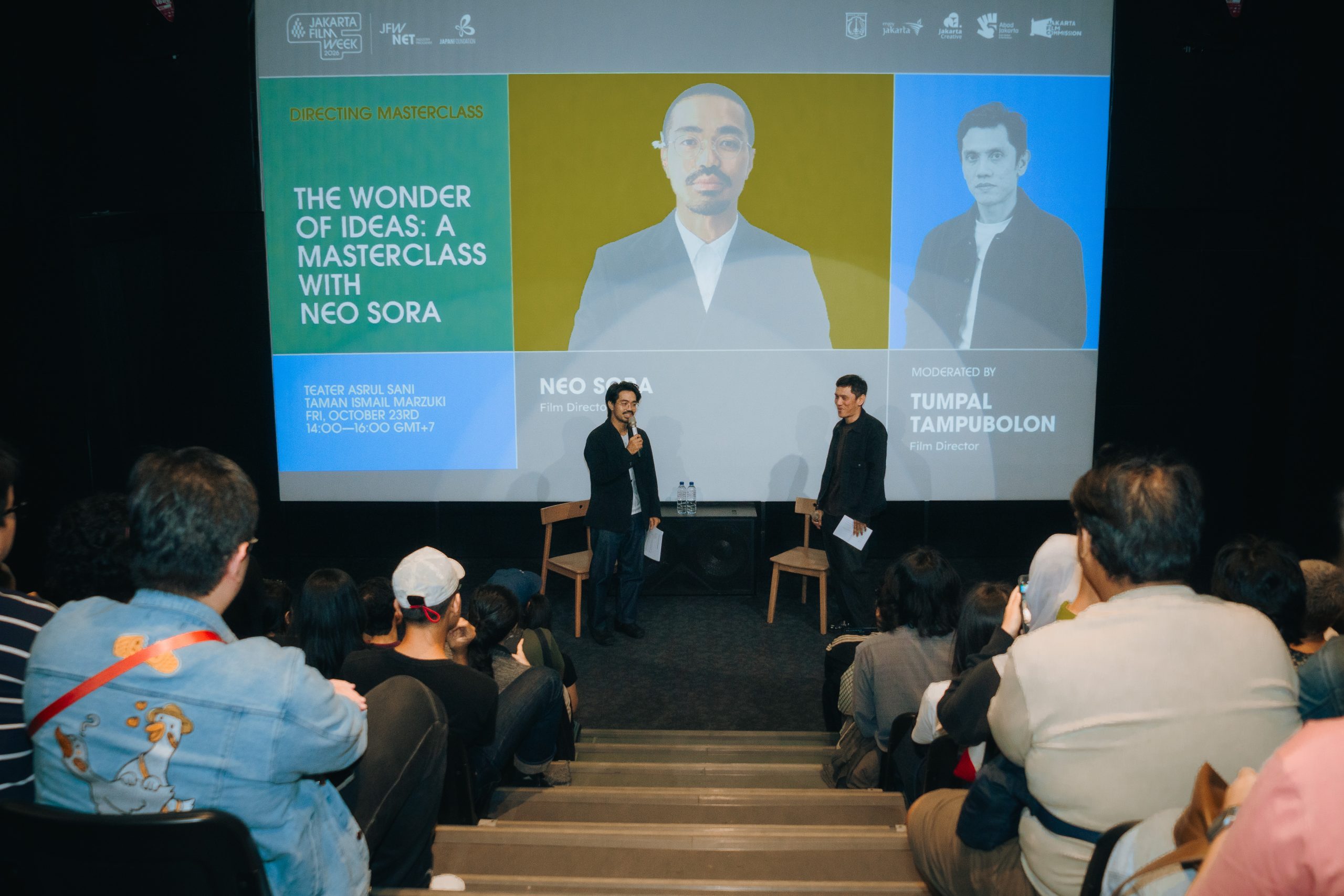
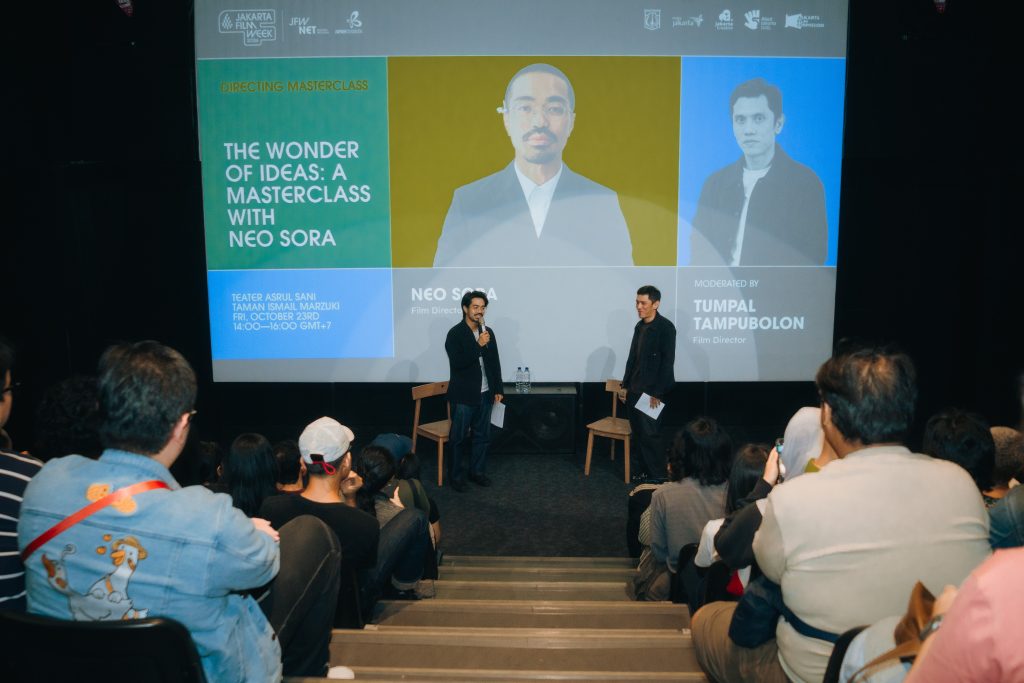
At Teater Asrul Sani, Taman Ismail Marzuki, director and producer Neo Sora shared his creative approach in the masterclass The Wonder of Ideas: A Masterclass with Neo Sora. Presented as part of the JFWNET Industry Program in collaboration with the Japan Foundation, the session was moderated by director and screenwriter Tumpal Tampubolon.
Neo Sora discussed how personal experiences, everyday observations, and sociopolitical realities can become sources of inspiration for filmmaking. He also reflected on his film Happyend (2024) and the concept of affect—an emotional experience that a filmmaker seeks to evoke in an audience through cinema.
“When making a film, I start with an effect that comes from personal experience. I use various techniques in cinema, filmmaking, and storytelling to reconstruct and rearrange the materials and ideas I have into something whole and coherent. In doing so, I hope audiences leave the cinema with an effect similar to what I felt,” said Neo Sora.
He also shared his habit of documenting small details from everyday life, from human behavior to simple observations of the surrounding environment. These notes can later serve as material for developing characters, scenes, and film ideas.
Industry Talks Open Doors to Collaboration
The Industry Talks series at Mercure Jakarta Cikini explored storytelling across different formats through a session titled Stories Beyond Medium. The discussion examined how changes in medium influence the way stories are told and how audiences engage with content.
“Every medium offers a different way of experiencing a story. As creators, we need to understand these changes and how they shape the way audiences engage with content,” said Titis Sapto Raharjo.
The following session, Find Your Ways to Co-Production, explored how filmmakers can build production partnerships with the right collaborators. Alexandra Zakharchenko emphasized that co-production involves more than securing funding; it also requires project development and building meaningful connections.
“The journey to co-production is about more than finding funding. It’s about developing your project, connecting with the right people, and creating opportunities for your film to travel further,” said Alexandra.
Beyond the discussions, Jakarta Film Week 2026 also presented Filmmakers Lounge: Director to Director with IFDC at Paviliun Raden Saleh, ARTOTEL Curated. The program provided a networking space for directors to connect, exchange ideas, and build relationships with fellow filmmakers.
On the same day, the talk program What Goes Unspoken? brought together director Ravi Bharwani, producer Wilza Lubis, and Agam Karim, Content Manager at Netflix Indonesia, with Nadine Alexandra as moderator. The session explored how stories can emerge through silence, expressions, and unspoken emotions, while also offering an exclusive first look at the film Secrets.
Directed by Ravi Bharwani, Secrets is a drama thriller included in Netflix Indonesia’s 2026 Indonesian film slate. The film follows Parni, a single mother striving to build a better future with her daughter, Riska, as her troubled past returns to haunt her.
Harga Teman Explores the Realities of Creative Workers
One of the films drawing audience attention on the festival’s third day was Harga Teman, the feature directorial debut of Andrew Kose, produced by Wregas Bhanuteja under Rekata Studio. Adapted from Debora Danisa’s novel Harga Teman: Design, Resign, Redesign, the 117-minute film follows Uji, a graphic designer from Dieng who loses his dream job in Jakarta and goes on to establish a creative agency with his friends.
Through comedy and friendship-driven drama, the film explores the experiences of creative workers, including the challenges of building a career and navigating a world where their professions are not always fully understood or valued.
During the post-screening Q&A, Andrew Kose shared his personal connection to the story.
“I’ve lived through that experience myself. Before becoming a filmmaker, I spent years wearing many hats, I worked as a photographer and also worked at a creative agency. When I read the book, the story felt very close to my own experience,” said Andrew.
Debora Danisa also expressed her satisfaction with the film adaptation. “What was presented in the film was truly beyond my expectations, and I was very happy with the ending. It stayed true to my vision,” she said.
The third day of Jakarta Film Week 2026 highlighted the many ways cinema can create opportunities for exploration and exchange, from developing stories for younger audiences and examining creative processes to connecting filmmakers and opening pathways for industry collaboration. Running from October 21–25, 2026, the festival presents 157 films from 59 countries through screenings and programs across multiple venues in Jakarta.
For more information about the schedule and programs, visit Jakarta Film Week’s official channels.
Related Article
Press Release
Day Three of Jakarta Film Week 2026 Brings Together Children’s Stories, Creative Ideas, and Film Industry Collaboration
Read Now
Press Release
Dari Sinema Hong Kong Hingga Jakarta Film Fund, Jakarta Film Week 2026 Hadirkan Ragam Pertemuan di Hari Kedua
Read Now
Press Release